top of page
Eliana Glass
Solo performance by a singer from New York who develops a unique sound with her minimal piano accompaniment.
Her sparse, meditative music reflects daily life, according to Eliana Glass. On her debut album E, her controlled low voice and minimal piano playing set the tone. She freely incorporates her influences; the album includes her own version of 'Dreams' by Annette Peacock and an adaptation of 'Sing Me Softly the Blues' by Carla Bley with new lyrics by Karin Krog. 'Emahoy' is an ode to the piano-playing nun Emahoy Tsegué-Maryam Guèbrou from Ethiopia.
Eliana Glass was born in Australia, grew up in Seattle, and is now based in New York. She studied vocal jazz at the New School with, among others, Kris Davis, Jay Clayton, Andrew Cyrille, and Ben Street. She taught herself to play the piano as a child. During her studies, she began writing songs, and during the pandemic, she felt drawn to the piano again. E was recorded with applied analog equipment in various studios with producer Francis Harris and engineer Bill Skibbe, who worked with Steve Albini and Jack White.
'The music sounds ageless, but her perspective as a singer-songwriter is subtly contemporary' (Pitchfork).
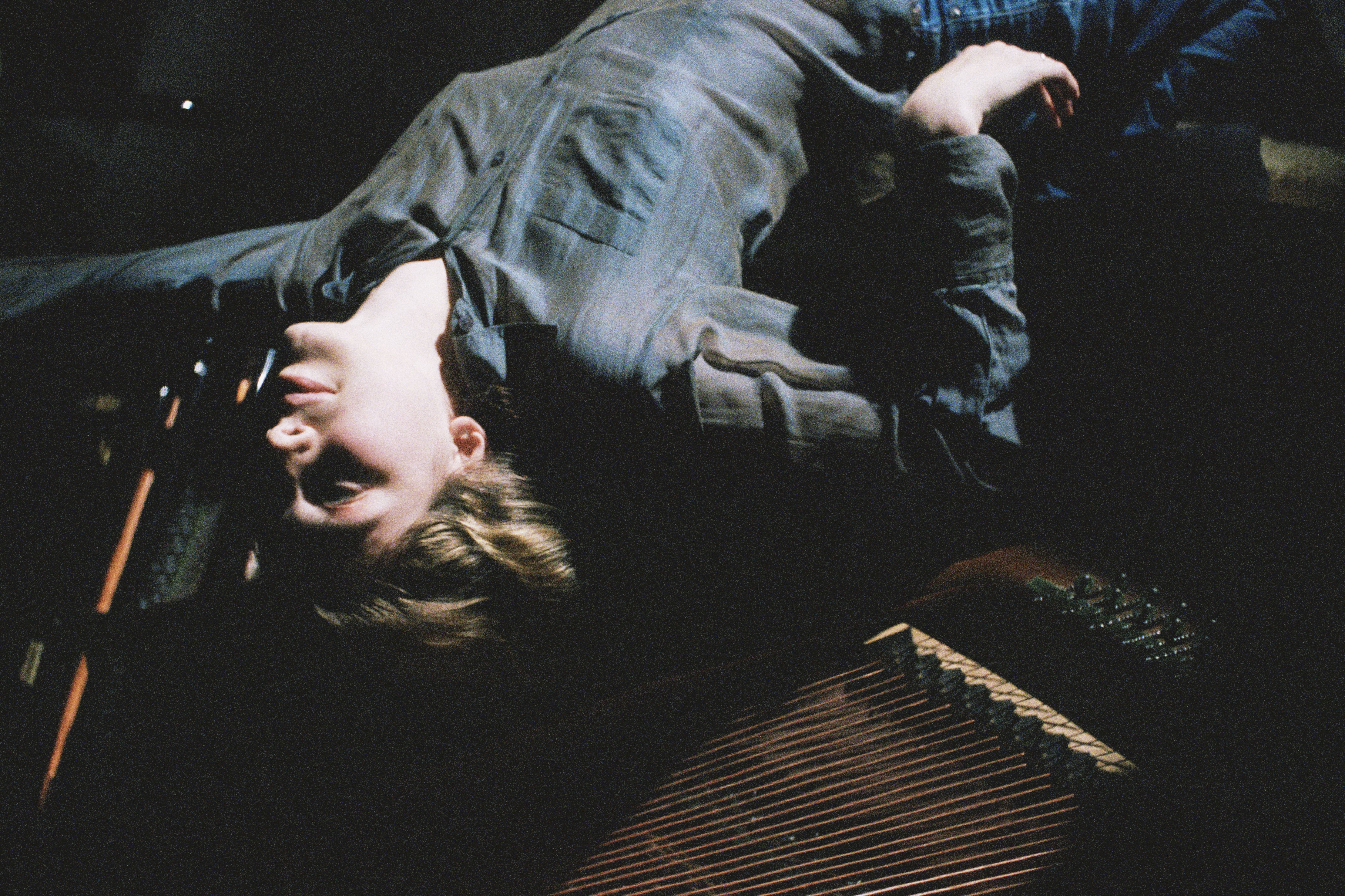
Eliana Glass
Solo performance by a singer from New York who develops a unique sound with her minimal piano accompaniment.
Her sparse, meditative music reflects daily life, according to Eliana Glass. On her debut album E, her controlled low voice and minimal piano playing set the tone. She freely incorporates her influences; the album includes her own version of 'Dreams' by Annette Peacock and an adaptation of 'Sing Me Softly the Blues' by Carla Bley with new lyrics by Karin Krog. 'Emahoy' is an ode to the piano-playing nun Emahoy Tsegué-Maryam Guèbrou from Ethiopia.
Eliana Glass was born in Australia, grew up in Seattle, and is now based in New York. She studied vocal jazz at the New School with, among others, Kris Davis, Jay Clayton, Andrew Cyrille, and Ben Street. She taught herself to play the piano as a child. During her studies, she began writing songs, and during the pandemic, she felt drawn to the piano again. E was recorded with applied analog equipment in various studios with producer Francis Harris and engineer Bill Skibbe, who worked with Steve Albini and Jack White.
'The music sounds ageless, but her perspective as a singer-songwriter is subtly contemporary' (Pitchfork).
bottom of page